
L’hors-présence
ou
Chimères du pays de Morsan
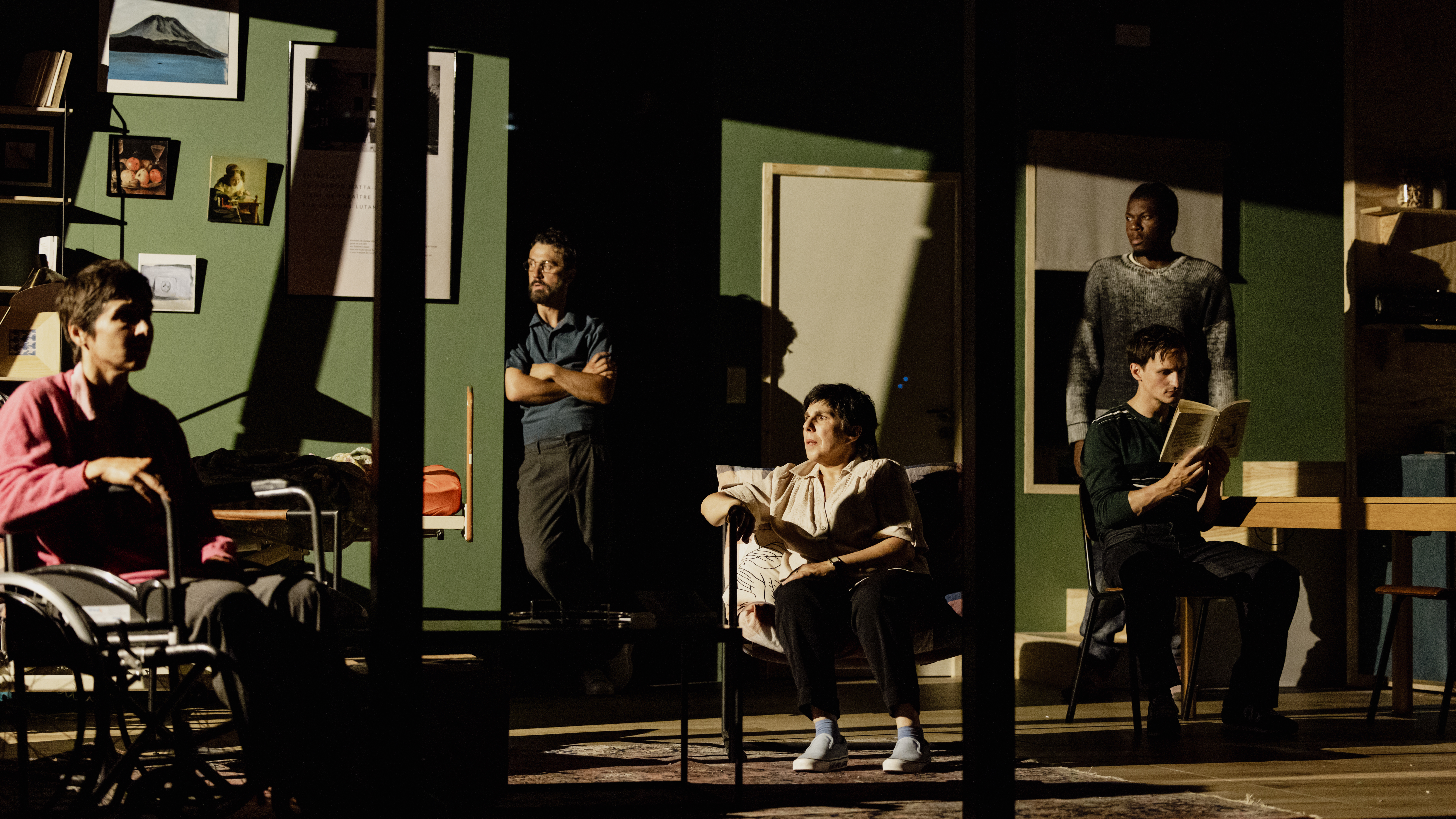
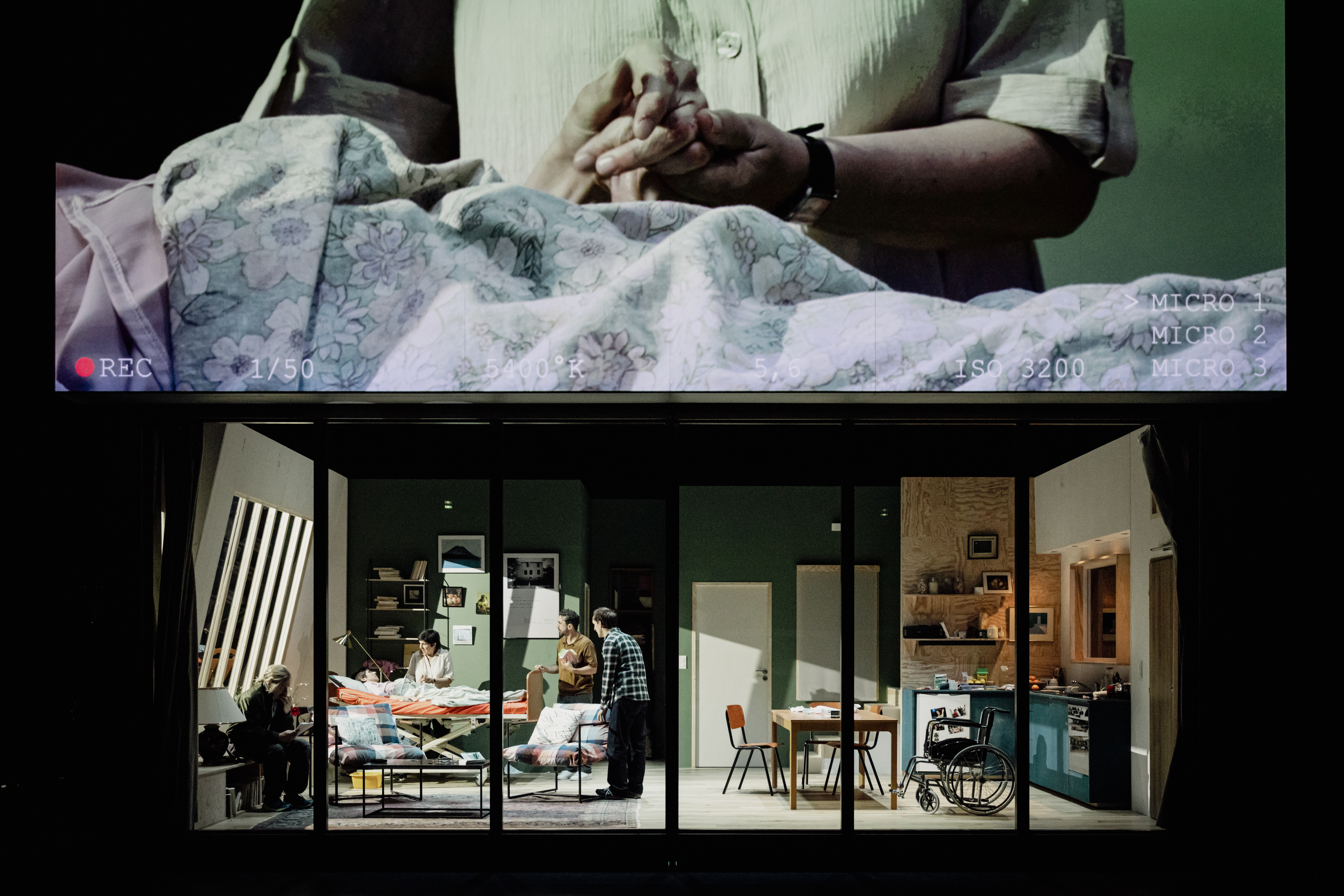
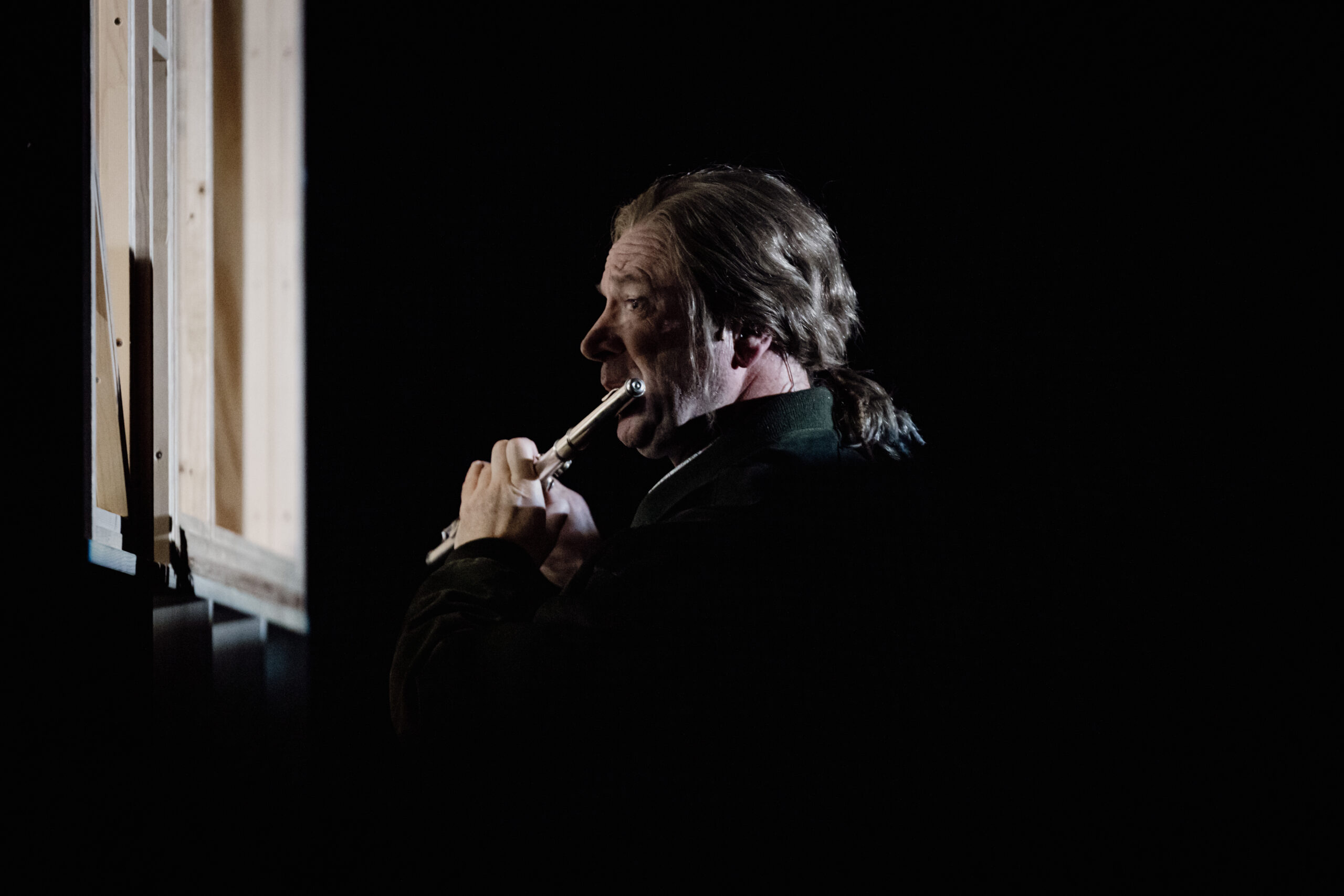
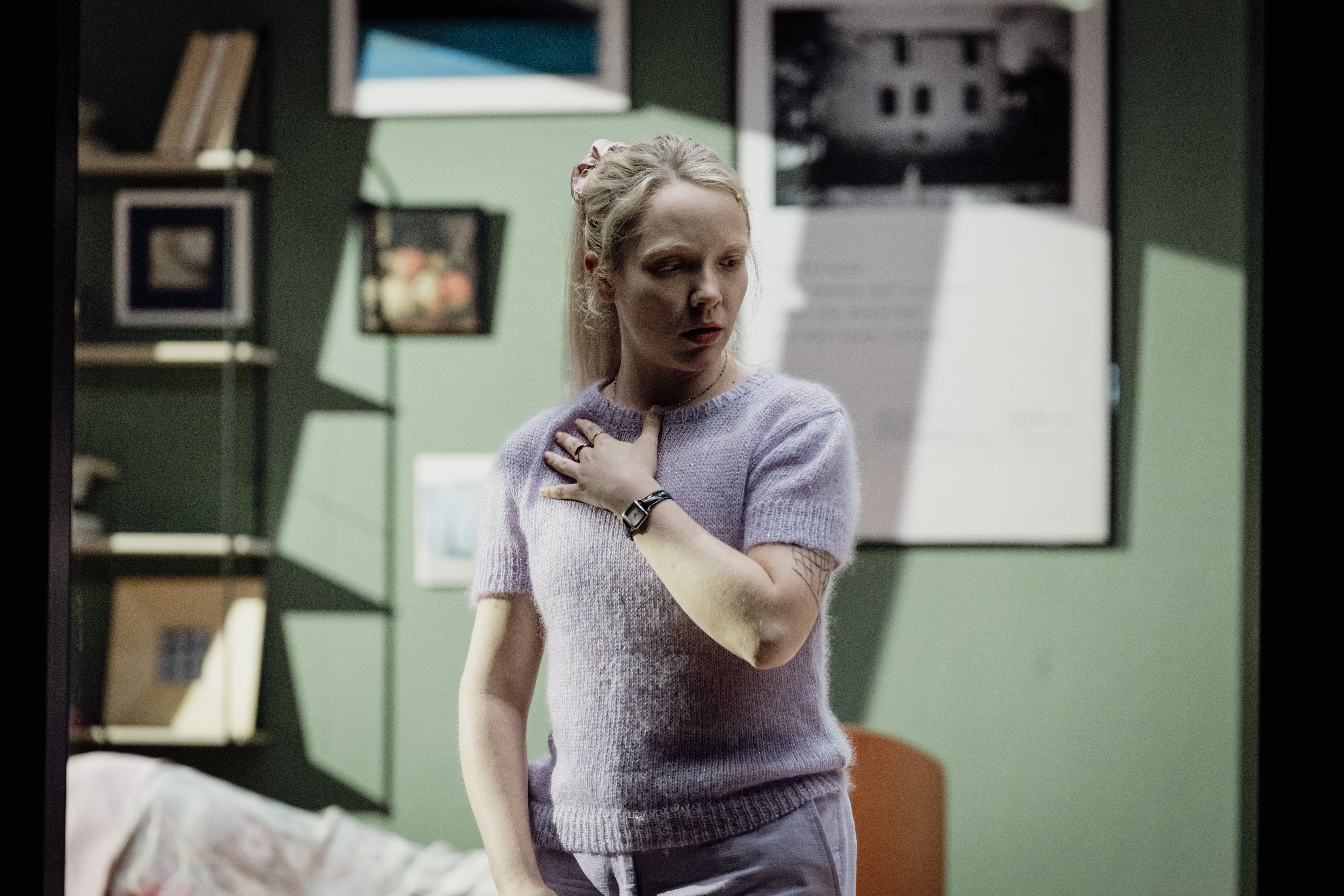
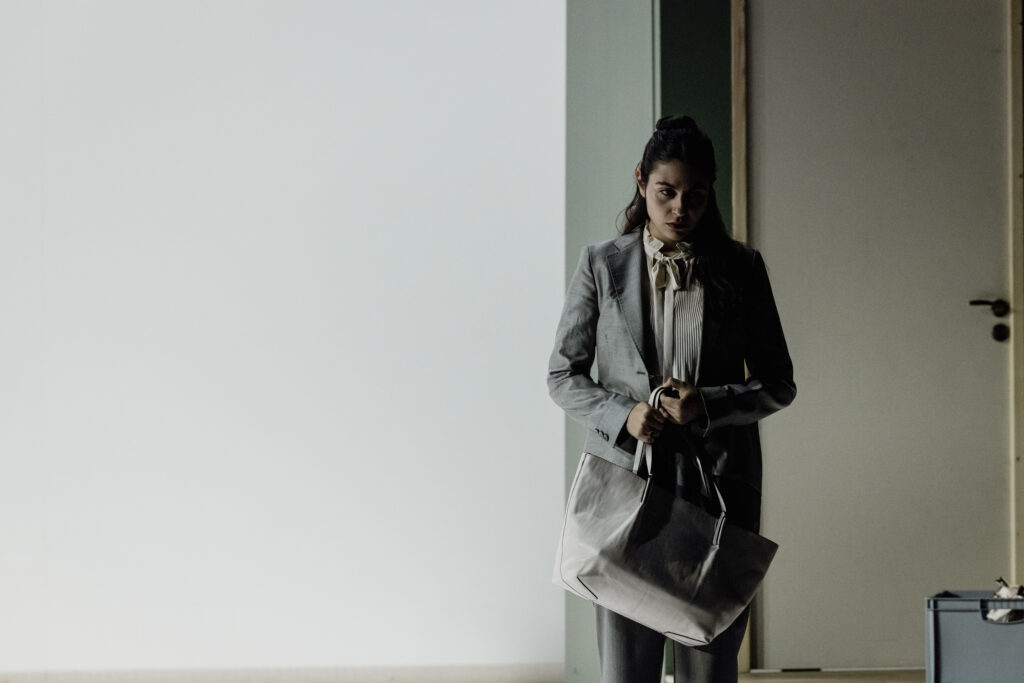
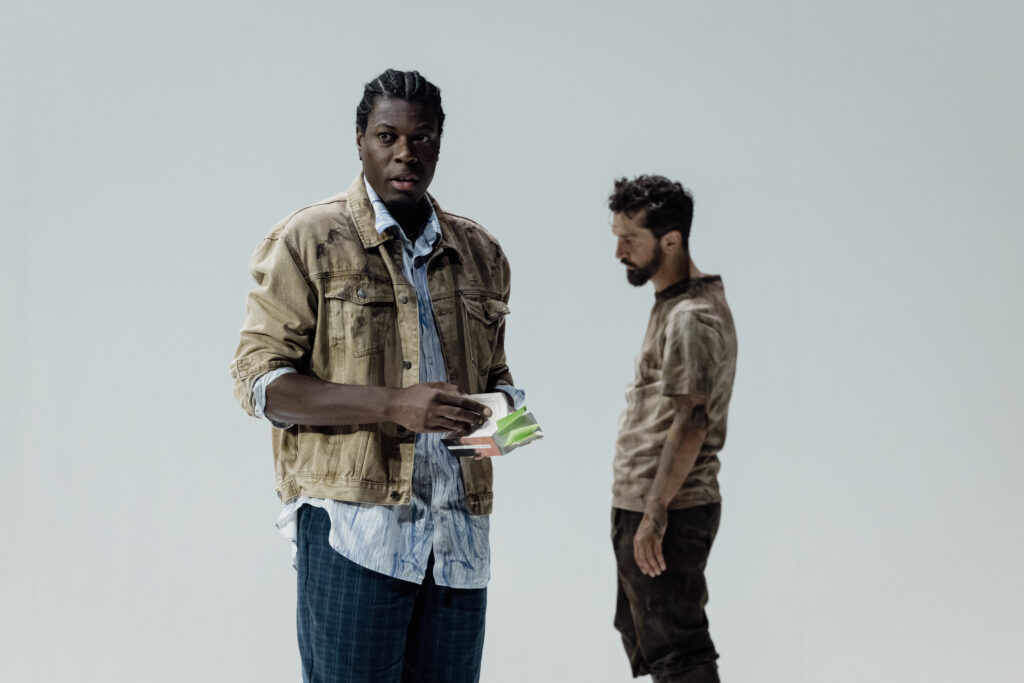
In a deserted village, Laure, terminally ill, returns home to die. Her two brothers and her sister join her to be with her in her final days. The siblings try to get organized, to establish routines, even as they struggle to put a name to the unnameable. They grapple with control, time, and language. But in the house across the street, someone seems to be watching them…
L’hors-présence is a play about the way we look at those who are dying. Who has the right to look, from what distance, and how? How can we look without judging? And what if what we call “the end of life” were actually the beginning of death—then when exactly would it begin? And when we watch a loved one die, what do we see? Their passing, our own, or that of humanity?
Robert William Higgins has called it “the invention of the dying”—this modern construct that exiles the dying person by demanding that they take control of their own end, by demanding that they alone define the dignity and value of their life. When death looms, all institutional rhetoric rings hollow, and so everyone clings to illusions.
A chimera is two things at once. A hybrid creature—a being made up of incompatible parts, pieced together by legend. Every child is a chimera—two lineages fused into a single body. But the chimera is also an illusion—a false belief we cling to. Every character in the play is a chimera in both senses of the word. Hybrid: at once loving and violent, brave and cowardly, lucid and blind. One believes that a plan can organize death, another that food can sustain life, yet another that mystery is better than knowledge. Creation itself is a chimera—for those who carry it without daring to bring it into being, it is both the monster that devours and the promise that saves. The dying woman, for her part, is perhaps the truest chimera—a body in metamorphosis, neither quite alive nor yet dead. L’hors-présence seeks what remains when chimeras fall.
Maurice Blanchot wrote that language is already a form of death—that to name a thing is to replace it with its absence. In this loss, Laure discovers something that literature has always sensed: only poetry can restore the thing to the world.
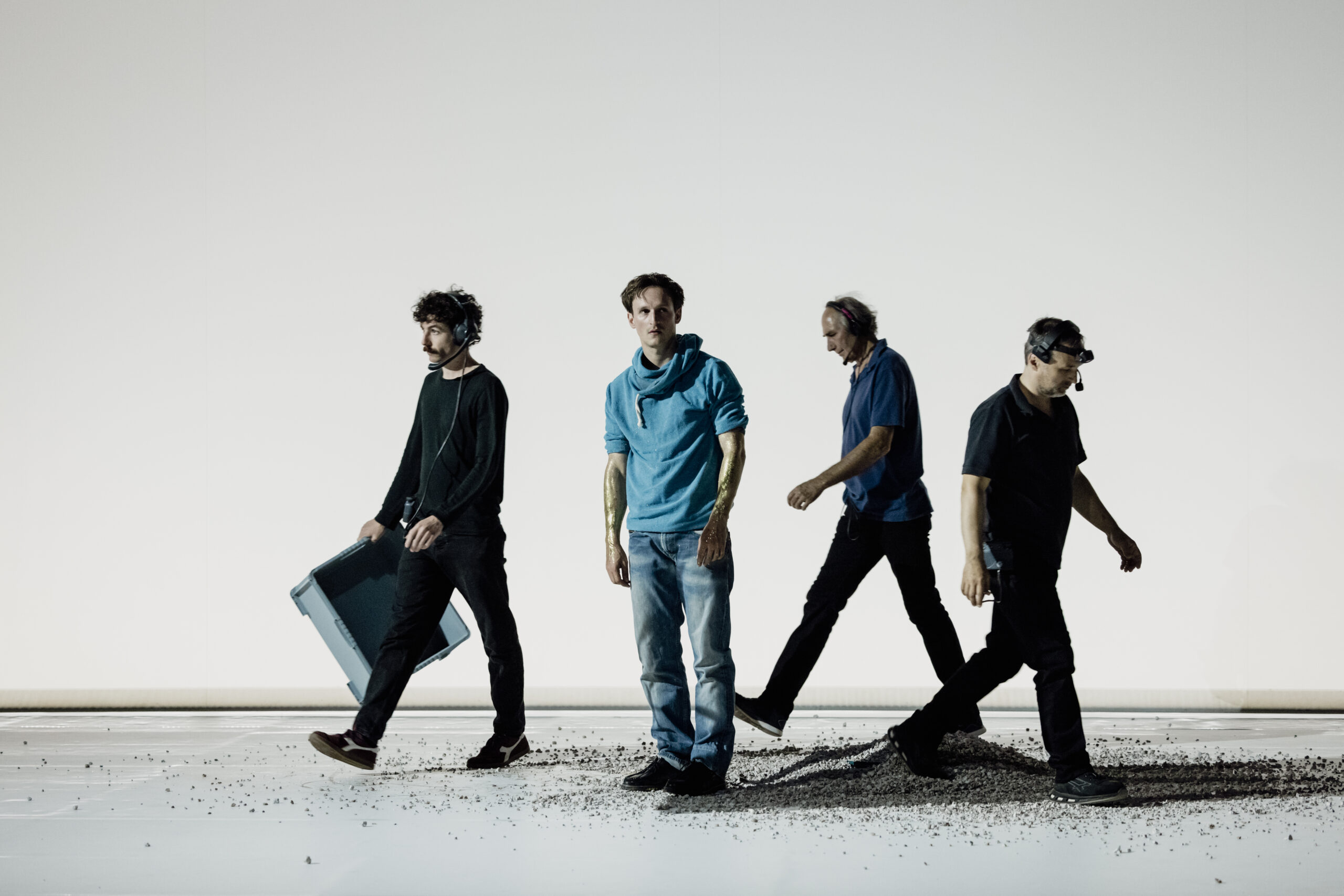
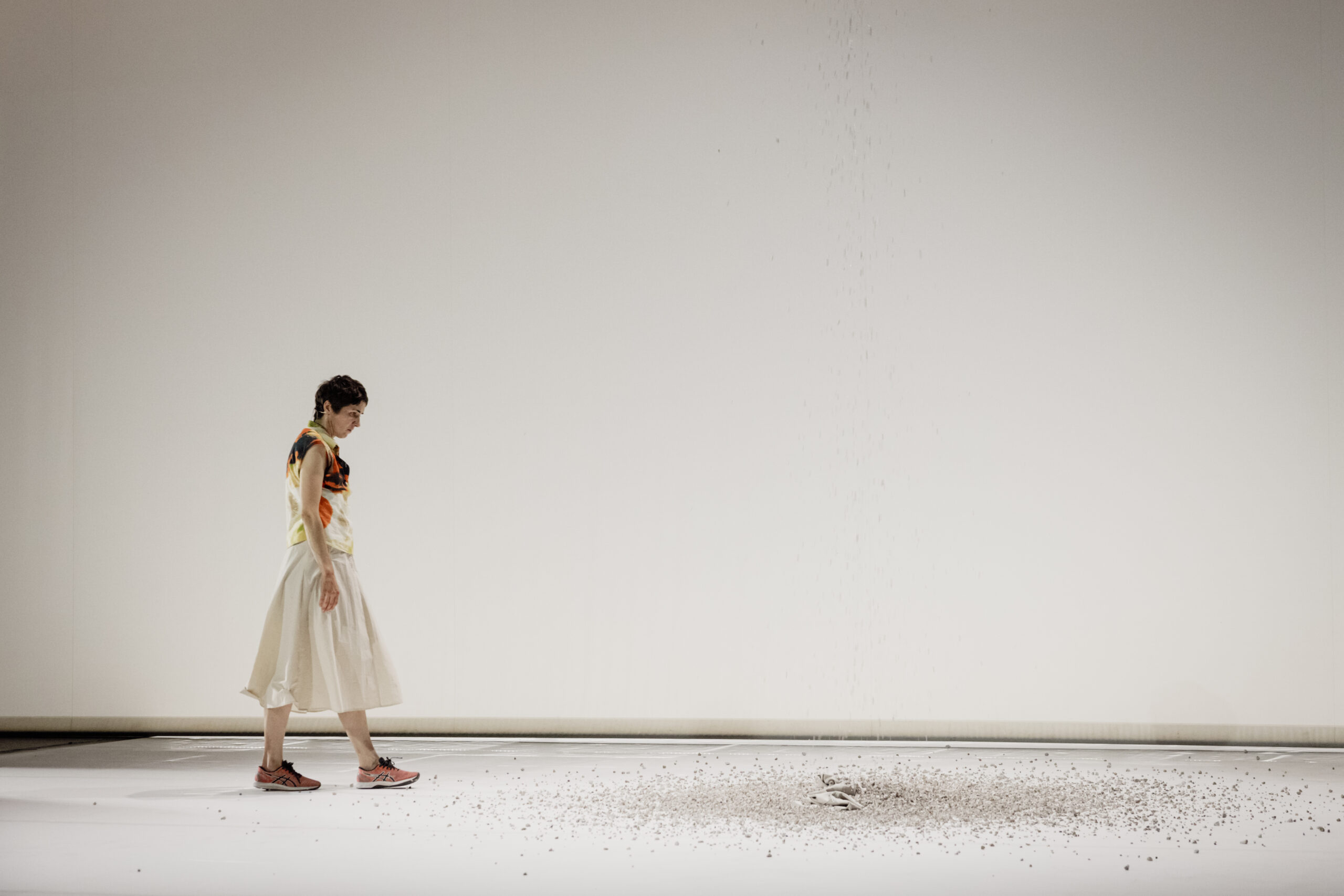
The staging embraces this disappearance. The theater seeks another form to express what the words invented by the institution cannot convey. Between Vermeer and contemporary art, between the camera obscura and radical dazzling, L’hors-présence attempts to restore to death what the institution has taken from it: its place at the center of the village.
Photos : Simon Gosselin
Creation the 4th of july, 2026 at Festival d’Avignon IN (La FabricA)
Text and staging Tiphaine Raffier
Featuring Emma Bolcato, Teddy Chawa, Thomas Gonzalez, Paula Luna, Édith
Mérieau, Catherine Mestoussis,Thierry Paret et Adrien Rouyard
Dramaturgy Lucas Samain
Staging assistant Mathilde Saillant
Scenography Hélène Jourdan
Lights Kelig Le Bars
Video Vincent Pinckaers
Framing Raphaël Oriol
Sound Hugo Hamman
Music Sylvain Jacques
Costumes Caroline Tavernier assisted by Paloma Donnini
Makeup and wigs Judith Scotto
General management Olivier Floury
Stage management Nicolas Bignan et Pierre Frenkel
Video management Nicolas Morgan
Sound management Hugo Hamman
Light management Christophe Fougou
Makeup and wigs management Emmanuelle Flisseau
Administration, production, booking Juliette Chambaud, Charlotte Pesle Beal and Elisa
Seigneur-Guerrini
Construction and set design Atelier du Nouveau Théâtre Besançon CDN
Excerpts from “Der Zauberberg” — “The Magic Mountain”
By Thomas Mann
French translation by Claire de Oliveira
Original edition used for this translation:
S. Fischer Verlag GmbH, Frankfurt am Main, 2002.
© S. Fischer Verlag GmbH, Frankfurt am Main, 1924, 2002.
© Librairie Arthème Fayard, 1931 for the French translation,
2016 for this new translation, the notes, and the afterword.
Production La femme coupée en deux
Coproduction Le Quai – CDN Angers, Théâtre Nanterre-Amandiers, Théâtre National
Populaire de Villeurbanne, La Comédie de Saint-Étienne – CDN, Nouveau Théâtre Besançon
CDN, La Comédie de Clermont-Ferrand, Théâtre National de Bretagne, Théâtre du Nord –
Centre Dramatique National Lille-Tourcoing-Hauts de France, La Criée Théâtre National de
Marseille, ThéâtredelaCité – CDN Toulouse Occitanie, Festival d’Avignon, Le Parvis Scène
Nationale Tarbes-Pyrénées, Scène nationale du Sud-Aquitain, Équinoxe – Scène nationale
de Châteauroux, Théâtre National de Strasbourg, Maison de la Culture d’Amiens – Pôle
International de Production et de Diffusion, La Comédie de Béthune – CDN Hauts-de-France
With the support of la Fondation d’entreprise Hermès et du Fonds SACD / Ministère de la
culture Grandes Formes Théâtre
With the help of Ministère de la culture
The presentation of this project was made possible thanks to PROSPERO NEW Platform, co-funded by the Creative Europe programme of the European Union.
Thanks to Théâtre Ouvert – Centre National des Dramaturgies
Contemporaines, for welcoming the first reading,
Max Beucher, Lukas Dana, Elsa Provansal, Jules Guittier, Ayla Derris, Andrea Portante
and the attendants of the AFR 109 at Quai- CDN Angers and the TNB Transmission masterclass pour for their precious contribution.
